

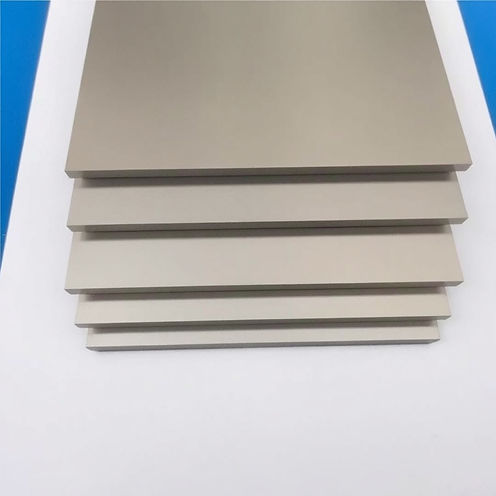
It seems straightforward enough to purchase molybdenum sheets, but it’s only when you begin referencing different grades, thicknesses, and production processes that it becomes complicated. Materials are important in manufacturing projects and need to be stable under pressures, heat and repeated use. The wrong sheet could translate to the need for more machining time or influence the quality of the finished product. When looking for a supplier, many engineers also make use of comparison, especially when it comes to the larger purchases, as consistency is important during the entire production process. Prices are rarely the most important factor in making material choices for challenging industrial uses.
Review Material Grades
Molybdenum may be the same grade at the first glance, but have different uses in manufacturing. Some grades offer more improvements in strength, others more thermal stability, and others more improvements in the characteristics of machining. It becomes easy to select when you know what you want the final application to be because the unnecessary specifications may make things more costly. Companies that deal with a Sputtering Target Manufacturer tend to conduct thorough material compatibility testing, as because of the different industrial conditions in which the different specialized metals are required to operate, they need to be compatible during production.
Examine Sheet Thickness
Thickness is much more than just the thickness of a molybdenum sheet. It affects the manufacturing process of the material, the efficiency of the formation, the stability of the structure, and the waste of material. Thin sheets can be used for precision components that are lighter in weight and require less weight, while thick sheets can be used for heavy industrial equipment. Design drawings are often compared between manufacturers before settling on the dimensions as any change in thickness at a later stage may mean production changes. Planning takes out the delays and contributes to smoother manufacturing processes throughout.
Check Surface Finish
Surface quality is crucial when molybdenum sheets are transferred directly to other machining or fabrication processes. It can also raise the amount of work required prior to production if the finishes vary. These are clean and uniform surfaces which minimize additional polishing operations and enhance uniformity in cutting, welding or forming processes. When purchasing Custom Sputtering Targets, buyers will often consider surface conditions as well, since precision manufacturing is often dependent on the quality of the material at each stage of the production process, rather than only chemical composition.
Evaluate Operating Conditions
Industrial materials face unique challenges in each manufacturing environment. Molybdenum is affected differently by high temperatures, vacuum, chemicals, or constant mechanical stresses. Knowing what the actual application is will help to limit the materials available to order. Materials have different properties after long industrial production cycles, so engineers will study short term and long production cycles. That practical evaluation helps to work towards better planning during the manufacturing process without having to make any other changes to the material in the process.
Verify Technical Specifications
Simple product descriptions don’t always give you the information that’s found in technical documentation. When making a purchase decision, mechanical properties, chemical composition, dimensional tolerances and inspection standards all play a part. Taking the time to read through specification sheets in detail also helps to avoid confusion when choosing between different suppliers. When dealing with a Sputtering Target Manufacturer, many companies consider certifications along with technical specifications, as manufacturing accuracy is directly related to the uniformity of material properties from one production run to another over a long period of time.
Compare Processing Methods
Molybdenum sheets might be rolled, cut, ground or finish further prior to being offered to industrial customers. Those production processes have an impact on the final performance in actual use. There are some techniques that enhance flatness, and others that enhance dimensional accuracy for particular industries. The processing and the methods it has gone through enable the buyers to correlate the materials with the requirements of their factories. The same evaluation is applicable to organizations that source Custom Sputtering Targets, as the precision manufacturing processes are greatly dependent on the quality of the material.
Assess Supplier Experience
When making industrial purchases, reliable suppliers do so much more than provide the products themselves. They can often give technical advice, certifications and comprehensive product details, making material selection easier. Responsive communication is particularly appreciated when projects have specific engineering needs, or when dimensions are especially complex. While price is important, buyers should also look at the expertise of their suppliers as well, because much of the time, after-the-fact production costs are added as the result of ordering the wrong material, and this could result in delays to the production line.
Conclusion
When selecting molybdenum sheets, it is not just about the price of the materials but also consider technical specifications, processing, operating conditions and supplier reliability. Regmetals.com offers access to industrial materials designed to aid in the manufacturing of precision metals, Custom Sputtering Targets and other engineering needs. Quite often, the additional time spent on comparing product details before acquiring the product will improve the production efficiency and the performance of the materials during the manufacturing process. With careful planning, today, industrial operations are typically smoother and more successful over time.