

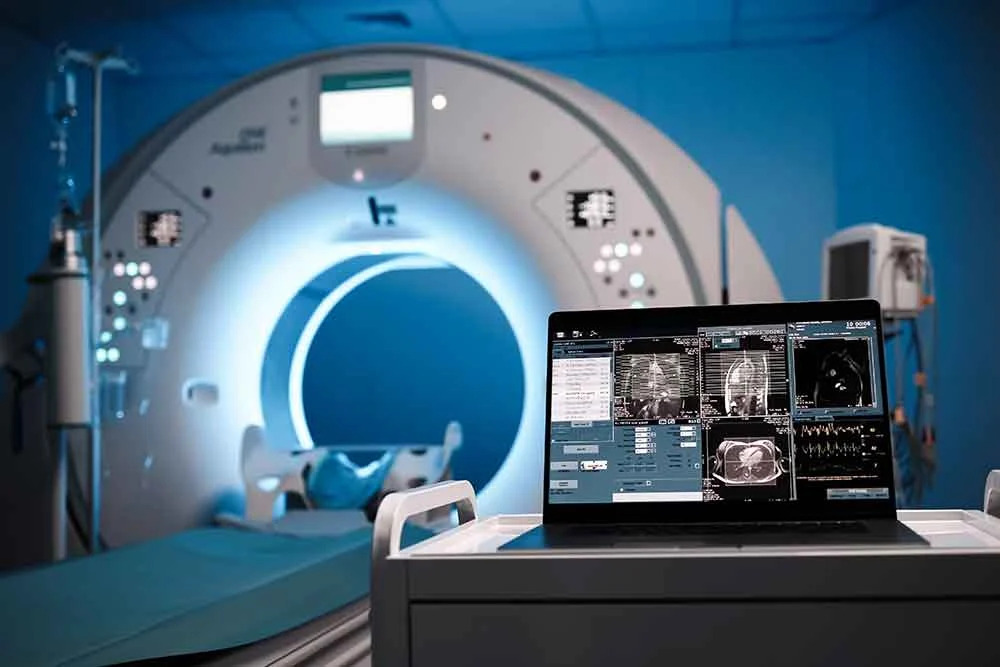
Early medical device teams often manage quality with shared folders, spreadsheets, and paper signatures. That approach can work while the team is small. As the company moves toward its first submission, adds suppliers, and hires new staff, those manual methods start to break under the weight of audits and regulatory expectations.
A quality management system (QMS) is the set of processes, records, and controls a company uses to show that its products are safe and consistently made. Choosing the right QMS for medical devices at the growth stage matters because the system must support the company today and still fit when headcount, product lines, and markets double. This article outlines the capabilities growing device makers should look for before they commit.
Built-In Support for Current Regulations
The regulatory baseline shifted in February 2026, when the Quality Management System Regulation (QMSR) from the U.S. Food and Drug Administration (FDA) took effect. The QMSR updated 21 CFR Part 820, the section of the Code of Federal Regulations (CFR) that covers device quality, and aligned it with ISO 13485. That standard comes from the International Organization for Standardization (ISO) and sets global requirements for medical device quality systems.
Companies selling in Europe also need to meet the European Union (EU) Medical Device Regulation (MDR). A system that maps one set of records to several frameworks saves growing teams from keeping parallel documentation for each market.
Electronic Records That Hold Up in an Audit
The FDA’s 21 CFR Part 11 sets the rules for electronic records and electronic signatures. Any medical device QMS a company chooses should include compliant e-signatures, automatic audit trails, and controls that show who changed what and when. Validation comes next, because regulators expect companies to validate every system they use for regulated records. Vendors that provide pre-built validation documentation can cut weeks from this effort, which matters for a small quality team with limited time.
Document control deserves close attention as well. Every procedure, work instruction, and specification needs a clear version history. Only the current approved version should reach the people who use it. Strong document control keeps the production floor, the quality team, and outside partners working from the same instructions.
Connected Quality Processes, Not Separate Tools
Many startups begin with separate tools for documents, training, and corrective actions. The gaps between those tools create risk. A complaint should lead naturally to an investigation, and that investigation should lead to a corrective and preventive action (CAPA) linked to the affected parts and documents. When these records live in one place, teams find root causes faster, and inspectors can follow the trail without searching through folders.
When evaluating options, growing device makers should ask a few direct questions:
● Will updating a procedure automatically trigger training for the people who use it?
● Can we trace a customer complaint to the exact part, document, and supplier involved?
● How long will validation take, and what documentation does the vendor provide?
● Can suppliers and contract partners take part in quality workflows securely?
● Will the system still fit when we have three times as many users and products?
A Link Between Quality and Product Data
Quality records describe products, so they work best when they connect to the product data itself. Product lifecycle management (PLM) software holds bills of materials (BOMs), drawings, and change orders. Linking it to the medical device QMS lets a design change and its quality impact move through one controlled process. Without that link, engineers and quality staff often copy information between systems, which invites errors and slows every change.
Growth-stage teams should also consider how quickly a system can go live. Cloud-based systems with standard configurations can often launch within weeks, which lets a small team focus on its first submission instead of a long software project.
Conclusion
The right quality system helps a growing device company pass audits, launch on schedule, and scale without rebuilding its processes every few years. Teams that look for current regulatory support, audit-ready electronic records, connected quality workflows, and a direct link to product data set a strong foundation for growth. Propel Software provides a trusted, cloud-native QMS for medical devices that unifies quality and product data on one platform. Propel gives growing device makers a reliable path from first submission to global scale.