
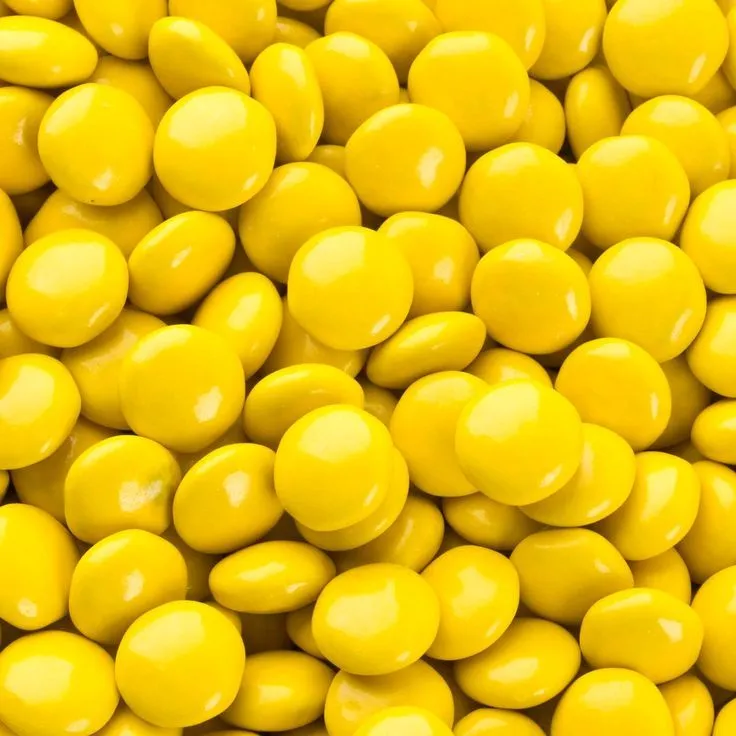
Yellow is a color that is commonly used in food and drink production and can be found in drinks, confectionery, bakery goods, as well as dairy. Natural yellow color can be used to get different shades ranging from light to darker yellow. However, this performance is variable depending on the source of the ingredient, the food, the processing conditions and the storage conditions. Prior to mass production, manufacturers should consider these factors.
Understanding Natural Yellow Color
Several botanical sources can be used to get natural yellow food color, such as turmeric, carotenoid-rich ingredients, safflower and others. Various sources can give different color and formulation.
The concentration of an ingredient in an ingredient product does not necessarily indicate the concentration of the finished product. The outcome may depend on the food composition, dosage, acidity, processing and other ingredients.
Therefore, in making a decision, product developers should assess the candidate ingredients in the intended application of the food product.
Consider the Food Application
The need for yellow color varies between food products. Good dispersion in water may be required for beverages, and dairy products may have fats and proteins that affect color distribution.
Bakery products will add heat during baking, and confectionery products may be associated with extended processing temperatures and concentrated sugar systems.
The food matrix and the food production process are thus an important starting point for manufacturers. This allows one to easily determine what color qualities are most significant for the application.
Evaluate Color Shade and Strength
Before comparing ingredients, you need to have the needed shade in place. In certain formulations, it may be necessary to have a slight lemon yellow tint, and in other formulations it may be necessary to have a deeper golden tint.
If using concentrated samples is the only method for evaluation, then color strengths should be determined at practical dosage levels. Strong color can be achieved at a lower dosage for a highly concentrated ingredient, but dispersion and final appearance should be considered.
Controlled application tests can be used to enable the manufacturer to make comparisons between ingredients under the same formulation conditions.
Review pH Conditions
Some natural dyes may be affected by the pH. The effect is dependent on the food matrix and the color source.
The ingredient should be tested at the pH that it will have in the actual product, not at a general pH assumption. If the formulation is still in the process of development, it can be tested over a practical pH range for additional information.
It is particularly helpful when formulating drinks, sauces, fruit products and other food products that have acidity as a significant characteristic.
Consider Heat and Processing
Food temperature exposures should be assessed whenever food is baked, cooked, pasteurized, or thermally processed in any other manner. The final appearance may be affected by the length of time and how intensely the heating is done.
What appears to be a good color prior to processing can be different after exposure to production temperatures. Manufacturers should thus be incorporating appropriate processing steps in lab trials.
Depending on the ingredient and the application, the color can also change during the production or storage process, due to other factors.
Check Format and Dispersion
Natural yellow color can be provided in a variety of formats, such as powder, liquid, emulsion or concentrate. The correct format will vary based on the food system and the food manufacturing process.
Some dry products can be made into a powder, while beverages or wet mixtures may be best prepared with a liquid or dispersible product.
Solubility, dispersion, concentration, handling and storage specifications should be considered by the manufacturers before deciding on the format. To obtain a uniform final appearance, good dispersion is required.
Evaluate Yellow Food Coloring in Storage
The evaluation of yellow food coloring should not be confined to the time of its manufacture but should also be made during its storage. The appearance of the finished food can be influenced by light, temperature, oxygen, packaging and storage time.
It is possible to carry out storage experiments on a practical basis to track changes over time by the manufacturer. Transparent packaging could need extra care as it can be exposed to light during the transportation or displaying process.
As much as possible, the storage evaluation should be as realistic as possible under commercial conditions.
Compare Ingredients Through Trials
Application trials are useful to compare natural yellow color sources. Manufacturers will be able to take the ingredients they wish to use at controlled dosage levels and compare them to the same recipe and processing conditions.
Some of the valuable observations are final shade, uniformity of color, dispersion, processing response and appearance during storage. The results of these can be recorded to provide a greater foundation for product developers when choosing an ingredient.
Testing will also determine if changes to dosage or formulation should be made prior to commercial production.
Conclusion
Carefully matched ingredient with formulation and processing environment can have a natural yellow color that works well in many food applications. There are several factors to take into account when considering approval of an ingredient: color strength, food matrix, pH, heat, format, dispersion, packaging and storage. The best selection criterion is practical testing under realistic conditions. For businesses considering natural food color options, they can go to FoodRGB.com to see what ingredients are available and talk to a suitable technical partner about what the specific formulation needs are.